
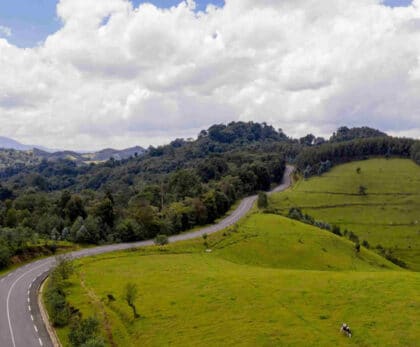
Most Rwanda itineraries centre tightly on gorilla trekking plus one or two headline stops, leaving worthwhile spots out entirely: Gishwati-Mukura National Park, Rwanda's smallest and least-visited park; the quieter islands of Lake Kivu; Kimironko Market in Kigali; and Nyungwe's waterfall trail. None require major detours; most fit into an extra day or half-day within a longer trip.
Table of Contents
Gishwati-Mukura National Park
Rwanda's fourth and newest national park sits between Volcanoes and Nyungwe, a fragment of restored forest that barely features on standard itineraries despite offering real primate and birdlife interest away from the crowds of the bigger parks. Confirm current access, guiding arrangements and activity availability directly with your operator, since visitor infrastructure here is considerably less developed than at Rwanda's three flagship parks and details change as the park's tourism offering matures.
It's a different experience from Volcanoes or Nyungwe: smaller in scale, quieter, and a reminder that Rwanda's forest conservation story extends well beyond its best-known parks.
Lake Kivu's Quieter Islands
Beyond the well-known lakeside towns, Napoleon Island and Amahoro Island offer a quieter, more local detour for travellers with a spare afternoon. See our Napoleon and Amahoro Islands guide for what each actually involves and whether they're worth building into your specific itinerary. They suit travellers looking for a slower, less curated experience over a headline lakeside activity.
"None require major detours; most fit into an extra day within a longer trip."
Kimironko Market
Kigali's main local market is a different experience from the more polished craft stalls aimed squarely at visitors: fabric vendors, fresh produce, and the everyday rhythm of the city, rather than a curated tourist stop. See our Kimironko Market shopping guide for practical tips on visiting respectfully and getting the most from it, particularly if fabric or textile shopping interests you.
Nyungwe's Waterfall Trail
Nyungwe's canopy walk draws the bulk of visitor attention, but the park's waterfall trail offers a quieter, equally rewarding hiking alternative that many itineraries skip in favour of the more famous walkway. See our Nyungwe waterfall trail guide for the route details and what to expect underfoot.
Choosing a Quieter Lake Kivu Base
Lake Kivu's shoreline towns each have a distinct character, and the less-visited options can make a different base than the busier southern shore. Our Rubavu vs Karongi vs Rusizi comparison breaks down which town suits which kind of trip, useful if you're specifically looking to avoid the more heavily-trafficked lakeside spots.
Why These Places Get Skipped
Most standard Rwanda itineraries are built tightly around gorilla trekking, since permits anchor the trip's timing and location, leaving limited flexibility for smaller detours unless they're deliberately planned in from the start. See our best places to visit in Rwanda guide for the headline destinations most itineraries do include, and treat this list as the deliberate additions worth requesting if you have a day or two of flexibility beyond the standard route.
If Kigali's creative scene interests you beyond the standard city highlights, our Inema Arts Center guide covers another spot that rarely makes it onto a first-time visitor's list despite being a local favourite.
Fitting a Detour Into an Existing Itinerary
The easiest way to add one of these stops is to build it around a leg of your trip you're already making. Kimironko Market fits naturally into a Kigali morning before or after other city activities; Lake Kivu's quieter islands work well as an add-on to a lakeside stay you've already planned; Nyungwe's waterfall trail can replace or supplement the canopy walk on a forest day you're already booking. Gishwati-Mukura is the exception. It sits somewhat between Volcanoes and Nyungwe geographically, so it needs its own dedicated stop or overnight rather than fitting neatly into either park's itinerary.
Mention any of these specifically when discussing your itinerary with your operator, since they're the kind of addition that needs to be requested rather than one that shows up automatically in a standard package.
Are They Actually Worth It?
Honestly, this depends on what you're looking for. None of these spots will out-compete gorilla trekking, Akagera's Big Five, or Nyungwe's canopy walk as the headline experience of a Rwanda trip, and travellers on a tight schedule are usually better served focusing fully on those. But for a second or third visit to Rwanda, or a first trip with a few flexible days built in, these additions offer a different, less-curated side of the country that most visitors never see, which is exactly the appeal for travellers who've already ticked off the highlights elsewhere in East Africa.
Frequently Asked Questions
What is Rwanda's least-visited national park?
Gishwati-Mukura National Park, Rwanda's newest and smallest national park, sees far fewer visitors than Volcanoes, Nyungwe or Akagera, despite real forest and primate interest.
Are Napoleon and Amahoro Islands worth visiting on Lake Kivu?
They're a worthwhile detour for travellers with a spare afternoon on Lake Kivu, offering a quieter, more local experience than the main lakeside towns.
Is Kimironko Market worth visiting as a tourist?
Yes, for travellers interested in daily Rwandan life and fabric or produce shopping. It's a local market rather than a tourist-oriented craft stall setup.
Why do these places get skipped by most itineraries?
Most standard itineraries focus tightly on gorilla trekking plus one or two headline destinations, leaving little time for smaller detours that require an extra day or deliberate planning.
Do I need extra time in my itinerary to see these hidden gems?
Generally yes. Most of these additions work best as a deliberate extra day or half-day built into a longer trip, rather than squeezed into an already tight standard itinerary.
Is Rubavu or Karongi a better base for exploring quieter parts of Lake Kivu?
Both offer a quieter alternative to the busier southern lakeshore; the right choice depends on your route and which activities matter most to you, covered in our dedicated comparison.
Should first-time visitors prioritise these hidden gems over the main highlights?
No. Gorilla trekking, Akagera and Nyungwe's canopy walk should generally take priority on a first trip. These additions suit travellers with extra flexibility or a repeat visit to Rwanda.