
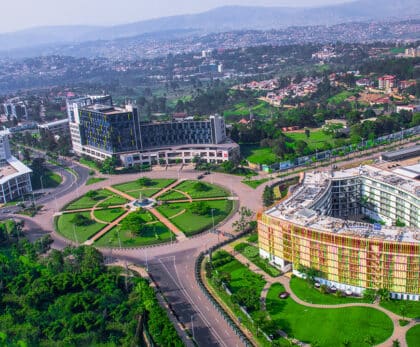
Spend day one on history and neighbourhood life: the Kigali Genocide Memorial in the morning, Kimironko market and Nyamirambo in the afternoon. Spend day two outdoors and creative: a Mount Kigali walk at sunrise, then galleries, coffee and craft shopping before your onward flight or transfer.
Table of Contents
- Why two days is enough to get a feel for Kigali
- Day 1 morning: orientation and the memorial
- Day 1 afternoon: markets and Nyamirambo
- Day 1 evening: dinner with a view
- Day 2 morning: Mount Kigali at sunrise
- Day 2 midday: galleries, coffee and craft
- A sample two-day schedule
- If you only have one full day
- Getting around between stops
- Extending your stay
- Practical notes before you go
- Frequently Asked Questions
Why two days is enough to get a feel for Kigali
Most visitors pass through Kigali on their way to gorillas or Akagera, and treat the city as a stopover rather than a destination. Two full days changes that. It is enough time to understand why the city is one of the cleanest capitals on the continent, to sit with the weight of its history at the memorial, and to spend an evening in a neighbourhood that has nothing to do with tourism at all. If you want the structure built for you rather than pieced together on your own, our Kigali tours cover this same ground with a driver-guide and flexible timing.
This plan assumes you arrive with a full first day and leave sometime on the second afternoon or evening. If your flight is earlier, cut the last section first.
Day 1 morning: orientation and the memorial
Start early, before the heat and the traffic build. A short walk or drive around your neighbourhood gives you a first read on the city: paved sidewalks, sorted rubbish bins, and almost no plastic bags in sight, all outcomes of policy choices rather than accident. Our article on why Kigali is so clean explains the rules behind what you are seeing, including the monthly community clean-up that shapes the whole country's relationship with public space.
By mid-morning, head to the Kigali Genocide Memorial in Gisozi. Plan for at least two hours. The exhibits move chronologically from the lead-up to the 1994 Genocide against the Tutsi through to the aftermath and the gardens where many victims are buried. This is not a stop to rush, and it is not a stop to skip. Our guide to visiting the Kigali Genocide Memorial covers what to expect inside, how to prepare, and how to spend the rest of the day afterward.
The memorial is a place of mourning, not a photo backdrop. Dress modestly, keep your voice low, and expect the visit to affect your mood for the rest of the morning.
Day 1 afternoon: markets and Nyamirambo
After lunch, contrast the morning with something lively. Kimironko Market is Kigali's largest, a maze of fabric stalls, fresh produce, and vendors who will bargain in good humour if you engage properly. Set aside an hour if you want fabric cut for a tailor, since many stalls work with an on-site seamstress who can turn a length of kitenge into a shirt or dress within a day or two.
From there, move to Nyamirambo, the neighbourhood locals describe as Kigali's most textured. Narrow streets, barbershops with hand-painted signs, mosques standing beside churches, and some of the city's best street food make it feel closer to how Kigali actually lives than the glass towers of the city centre. Our Nyamirambo neighbourhood guide lays out a walking route, and a local walking tour is the easiest way to see it properly if you do not want to navigate alone.
Day 1 evening: dinner with a view
Kigali is built across ridges and valleys, so many restaurants use the terrain deliberately, with terraces that catch the sunset over the surrounding hills. Book a table with a view for your first evening, order a Rwandan dish alongside something familiar, and let the day settle. If you want specific names and what each is known for, see our roundup of the best restaurants in Kigali.
Day 2 morning: Mount Kigali at sunrise
Set an early alarm for day two. Mount Kigali, the ridge that gives the city its name, is reachable from several city neighbourhoods and rewards an early start with cooler air and a view over the whole city before the haze builds. The hike itself is moderate rather than technical, doable in trainers, and short enough to be back for a late breakfast. Our Mount Kigali hike guide covers the route options, how long to allow, and where to start if you are walking from the city centre.
If a hike is not for you, an easier alternative is Nyandungu Eco-Park in the city's northeast, a restored wetland with walking boardwalks and none of the elevation gain.
Day 2 midday: galleries, coffee and craft
Kigali's art scene has grown quickly, with several serious galleries showing Rwandan painters, sculptors and photographers rather than tourist curios. Spend an hour or two moving between two or three spaces, and budget for a purchase if something holds your attention, since buying directly from a gallery supports the artist far more than a souvenir stall does. Our guide to Kigali's art galleries lists which ones are worth the detour.
Break for coffee somewhere that roasts on site. Rwandan coffee is grown at altitude on volcanic soil, and a good Kigali café will tell you which cooperative or washing station the beans came from. Pair the visit with a stop at a craft cooperative for baskets, textiles or cow horn work if you want a souvenir with a clear origin.
A sample two-day schedule
| Time | Day 1 | Day 2 |
|---|---|---|
| Early morning | Neighbourhood walk | Mount Kigali hike |
| Mid-morning | Genocide Memorial | Breakfast, rest |
| Afternoon | Kimironko Market, Nyamirambo | Galleries and coffee |
| Evening | Dinner with a view | Craft shopping, departure prep |
Adjust the order if your flight leaves in the morning rather than the evening: swap Mount Kigali to day one at sunrise and use day two's morning for the memorial instead.
If you only have one full day
Visitors on a tight layover sometimes ask what to cut. The memorial should stay. After that, choose either Nyamirambo or the art and coffee circuit, not both, and skip Mount Kigali unless your flight is genuinely late in the day. A driver-guide who knows the traffic patterns can compress this into a single day more comfortably than you can plan alone.
Getting around between stops
Kigali traffic is manageable by regional standards but still worth planning around, especially at the start and end of the working day. Moto-taxis are fast and cheap for short hops, regular taxis suit groups or luggage, and a private driver removes the guesswork entirely if you are moving between several stops in one day. If you are combining this itinerary with car hire elsewhere in the country, our Kigali tours team can also arrange a driver-guide for just these two days.
Extending your stay
If two days becomes three, add a half-day trip out of the city rather than more time within it. Akagera National Park is close enough for a long day trip, and several cultural experiences in the surrounding hills work as an easy add-on. Ask your operator to slot these in before or after the core itinerary above, since a driver already booked for the two days can usually extend with notice.
Build in one unscheduled block of two to three hours somewhere in the two days. Kigali rewards wandering, and a fixed itinerary with no slack tends to feel rushed by the second afternoon.
Practical notes before you go
Rwanda's currency is the Rwandan franc, and cards are widely accepted in central Kigali though less so in markets and small eateries, so carry some cash. English, French and Kinyarwanda are all in use, and a few Kinyarwanda greetings go a long way with vendors and drivers. Modest dress is appropriate everywhere, and it matters specifically at the memorial.
Frequently Asked Questions
Is two days really enough to see Kigali properly?
Two full days lets you cover the memorial, one neighbourhood in depth, a hike, and the gallery and coffee circuit without rushing any of them. It will not show you everything the city has, but it gives an honest sense of it rather than a passing glance.
Should I visit the Genocide Memorial on day one or day two?
Either works, but many visitors prefer day one so the rest of the trip is not shadowed by it. If you would rather process it before departure, move it to your final morning instead.
Do I need a car for this itinerary, or can I walk?
Nyamirambo and the market can be combined with some walking, but Mount Kigali and moving between distant neighbourhoods are easier with a moto-taxi, taxi or private driver. Traffic and hills make walking the whole itinerary tiring rather than practical.
What should I wear to the memorial?
Modest, neutral clothing that covers shoulders and knees is appropriate. Photography rules are posted at the entrance and should be followed without exception.
Can this itinerary be combined with gorilla trekking or Akagera?
Yes. Most travellers use these two Kigali days either at the start of a trip to adjust to the time zone, or at the end to decompress before flying home. A single driver-guide can often cover both the city days and the onward journey.
Is Nyamirambo safe to walk around in the evening?
Nyamirambo is a lively, well-populated neighbourhood and generally comfortable in the early evening, though a local guide or a walking tour is the easier option if you do not know the streets, since some of the best food stalls are down side alleys that are hard to find alone.