
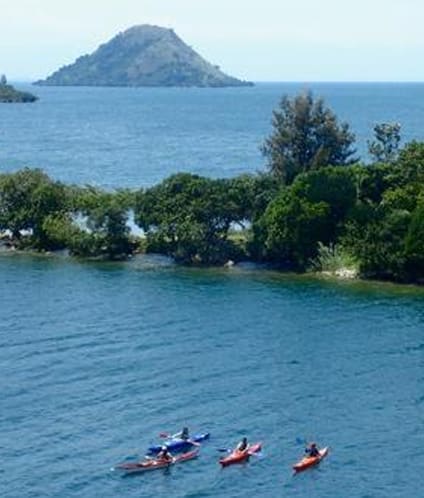
Lake Kivu's calm, generally crocodile-free waters make it one of the best lakes in East Africa for recreational kayaking, with routes ranging from short lodge-based paddles to longer guided trips toward the islands. Most lakefront towns (Rubavu, Karongi and Rusizi) have operators offering rentals and guided routes.
Table of Contents
- Why Lake Kivu Works So Well for Kayaking
- Popular Routes
- Kayaking for Different Skill Levels
- Booking a Kayak
- Safety Considerations
- What to Bring
- Best Time of Day and Season
- Combining With Other Lake Kivu Activities
- Passing Traditional Fishing Villages
- Physical Demands and Fitness
- Frequently Asked Questions
Why Lake Kivu Works So Well for Kayaking
Unlike most African Great Lakes, Lake Kivu has no significant crocodile or hippo population in its main swimming and paddling areas, making it unusually safe and relaxed for kayaking without the caution needed elsewhere. This is directly connected to the lake's unusual geology. See our Lake Kivu methane gas guide for the fuller explanation of why this lake differs so much from other East African lakes in this respect.
Popular Routes
Short lodge-based routes hug the shoreline for an hour or two, while longer guided trips head toward Napoleon or Amahoro islands, combining paddling with an island stop. See our Napoleon and Amahoro islands guide for what these specific destinations offer once you arrive. Specific route distances and typical durations vary by operator and starting point, so confirm current options with whichever lodge or operator you're booking through rather than assuming a fixed distance applies everywhere.
"Unusually safe and relaxed for kayaking compared to most African lakes."
Kayaking for Different Skill Levels
Complete beginners are well served by short, calm, lodge-based shoreline paddles that require no prior experience and stay close to shore throughout. Longer routes toward the islands involve sustained paddling over open water and suit those with at least some prior kayaking experience or a reasonable baseline fitness level, since a multi-hour round trip is real physical activity rather than a purely leisurely float. Tandem kayaks, where available, can help pair a less experienced paddler with a stronger one, making longer routes more accessible to mixed-ability groups or families without excluding anyone from the activity entirely.
Booking a Kayak
Most lakefront lodges rent kayaks directly, and independent operators in Rubavu and Karongi offer guided multi-hour trips. Morning paddles typically have the calmest water. Current rental and guided-trip costs vary by operator and route length. Confirm pricing directly rather than assuming a fixed rate, since this can change and differs between a simple rental and a fully guided trip with an accompanying paddler.
Safety Considerations
Life jackets should be provided and worn regardless of your swimming ability or the calm appearance of the water. This is standard practice for any open-water kayaking activity, not a sign of excessive caution specific to Lake Kivu. Weather on the lake can change with relatively little warning, and afternoon winds in particular can pick up more than a calm morning might suggest. Confirm current weather guidance with your operator before setting out, especially for longer island routes further from shore. A reputable operator will delay or reschedule a trip if conditions warrant it, and treating that guidance seriously rather than pushing to keep to a planned schedule is the right call whenever it comes up.
What to Bring
Sun protection is essential given the lack of shade on open water: reef-safe sunscreen, a hat with a chin strap that won't blow off, and sunglasses with a retention strap are all worth having. A dry bag for your phone or camera protects electronics from splashing, and a change of clothes left in your vehicle or at your lodge means you're not stuck in wet clothing for the rest of the day. Water and a light snack are worth bringing on longer routes specifically, since there's typically no opportunity to buy either once you're out on the water away from the shoreline.
Best Time of Day and Season
Morning paddles typically offer the calmest water before any afternoon wind picks up, making this the generally preferred time for longer routes specifically. Seasonal conditions can also affect typical water calmness and visibility. Ask your operator about current conditions if you're planning around a specific time of year rather than assuming year-round consistency.
Combining With Other Lake Kivu Activities
Kayaking pairs naturally with other Lake Kivu activities on a longer stay. See our sunset boat cruise guide for a more relaxed, less physically active way to be out on the water later in the same day, and our Lake Kivu travel guide for the fuller range of things to do around the lake beyond paddling.
Passing Traditional Fishing Villages
Many kayaking routes pass small lakeside fishing communities, offering an unstaged glimpse of daily life on the lake beyond the tourism-focused lodge areas. Traditional Lake Kivu fishing methods, including any distinctive local boat types or nighttime fishing practices, are worth asking your guide about directly if this interests you, since a paddle-past view alone doesn't capture the full picture of how these communities actually fish the lake.
As with any activity passing through a working community rather than a purely tourist-designed space, basic courtesy applies. Waving and smiling is generally well received, but treating the villages as a photo backdrop without any acknowledgment of the people living there is worth avoiding.
Physical Demands and Fitness
Short shoreline paddles require minimal fitness and are accessible to most travellers regardless of exercise background, but longer island routes involve sustained paddling that can leave unconditioned arms and shoulders sore the following day. Building in a rest stop partway through a longer route, where feasible, helps manage this, and being honest with your guide about your fitness level when booking helps ensure you're matched to an appropriately paced route rather than an overly ambitious one.
Frequently Asked Questions
Is kayaking on Lake Kivu safe?
Generally yes. The lake has minimal crocodile or hippo presence in main recreational areas, though it's still worth checking locally for the specific spot and conditions.
Do I need kayaking experience?
No, most lodge-based routes are beginner-friendly on calm water; longer guided routes may suit those with some paddling experience.
How much does kayak rental or a guided trip cost?
Costs vary by operator and route length. Confirm current pricing directly rather than assuming a fixed rate.
Are life jackets provided?
They should be, and are worth wearing regardless of your swimming ability or how calm the water looks, standard practice for open-water kayaking generally.
Why doesn't Lake Kivu have hippos and crocodiles like other African lakes?
This connects to the lake's unusual geology and dissolved gas composition. See our dedicated Lake Kivu methane gas guide for the full explanation.
Can I kayak all the way to Napoleon or Amahoro island?
Yes, on longer guided routes: these trips combine sustained open-water paddling with a stop at the island itself, suited to those with reasonable fitness or prior paddling experience.
Does the afternoon wind make kayaking harder?
Afternoon winds can pick up more than a calm morning suggests. Morning paddles are generally preferred for the calmest conditions, especially on longer routes.
Will I pass local fishing villages during a kayaking route?
Many routes do, offering a glimpse of daily lakeside life. A friendly wave is appropriate, but treat these communities as people's homes rather than a photo backdrop.
How physically demanding is a longer island route?
Demanding on unconditioned arms and shoulders. Being honest about your fitness level when booking helps ensure you're matched to an appropriately paced route.