
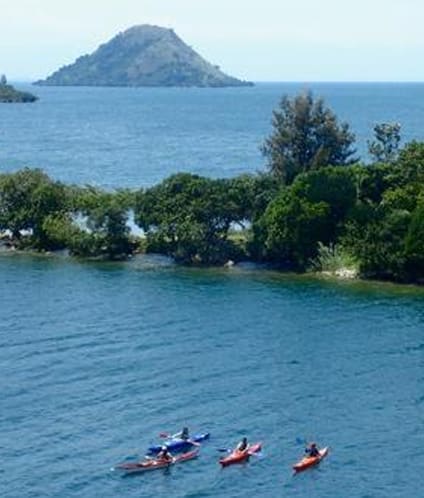
Napoleon's Island and Amahoro Island are two small, forested islets on Lake Kivu reachable by boat from Karongi or Rusizi. Napoleon's Island is known locally for the large colony of fruit bats roosting in its trees, while Amahoro, whose name means peace, offers a quieter shoreline stop. Most visits combine both in a single boat outing.
Table of Contents
- Two small islands, two different reasons to visit
- Napoleon's Island and its fruit bats
- Amahoro Island: a quieter stop
- Booking a boat trip to the islands
- The best time of day to go
- Combining the islands with the rest of your Lake Kivu trip
- What to bring
- Costs to expect
- Mistakes to avoid
- Photographing the islands respectfully
- How the islands fit into a longer Lake Kivu stay
- Frequently Asked Questions
Two small islands, two different reasons to visit
Lake Kivu's southern stretch holds a scatter of small, forested islets, and two of the better known are Napoleon's Island and Amahoro Island. They sit close enough together that boat operators typically combine them into a single outing rather than treating them as separate trips. Each has its own character. Napoleon's Island draws visitors for its wildlife, while Amahoro, whose name means peace in Kinyarwanda, is valued for its calm and its views.
If you are planning a broader Lake Kivu trip, our Lake Kivu tours page shows how an island boat trip fits alongside the region's beaches, coffee visits and hot springs.
Napoleon's Island and its fruit bats
Napoleon's Island is named, according to local telling, for its shape when seen from the water, said to resemble a hat associated with the French general. Its main draw for visitors is not its shape but its wildlife: the island is known locally for hosting a large colony of fruit bats that roost in its trees during the day and leave in numbers around dusk to feed on the mainland.
A boat trip typically brings you close to the shoreline rather than landing directly, since the island's ecology is fragile and the bat colony benefits from limited disturbance. Your guide will time the visit to give you the best chance of seeing bats stirring in the canopy, without pushing the boat in close enough to disturb them.
Fruit bats play an important role in seed dispersal and pollination across the region's forests, making colonies like this one more than a curiosity for photographs.
Amahoro Island: a quieter stop
Amahoro Island offers a calmer contrast to Napoleon's Island's wildlife draw. Its name, meaning peace, reflects the reputation it has built among visitors looking for a quiet stop on the water, away from town noise and boat traffic. Some visits include a short landing here, weather and water levels permitting, where you can walk a short stretch of shoreline and take in the view back across the lake.
| Island | Known for | Typical visit style |
|---|---|---|
| Napoleon's Island | Fruit bat colony, striking shape | Close approach by boat, limited landing |
| Amahoro Island | Calm atmosphere, views | Short landing, walk along the shore |
Booking a boat trip to the islands
Trips to Napoleon's and Amahoro Island typically leave from Karongi or Rusizi, depending on which town you are based in for your Lake Kivu stay. Boats range from small shared trips to private charters, and most operators combine both islands into a single outing lasting a few hours. Book through a licensed local operator or your guide rather than an informal arrangement on the shore, since a proper boat with safety equipment matters more on open water than it does close to a beach.
Ask specifically whether the trip includes both islands or only one. Some shorter, cheaper outings visit only Napoleon's Island and skip the Amahoro landing.
The best time of day to go
Late afternoon is often recommended for a Napoleon's Island visit, since this is when fruit bats become more active ahead of their evening flight to feed. Morning trips give calmer water and clearer light for photographs of the shoreline and the surrounding hills. If seeing the bats in flight matters most to you, choose a trip timed to reach the island as the light starts to fade, and confirm with your operator that this is part of their standard schedule.
Combining the islands with the rest of your Lake Kivu trip
An island boat trip pairs naturally with time in Karongi or Rusizi rather than standing alone. Many visitors add a morning at the lake before or after visiting a coffee washing station on the Kivu belt, or extend their stay with a look at Rubavu's beaches and the Rubavu hot springs further north. If your interest is more in the science of the lake than its islands, our explainer on Lake Kivu facts covers the geology behind Kivu's unusual depth and gas layers.
For a longer stay built around the water, our Lake Kivu beach extension sets aside time for exactly this kind of boat outing alongside beach and lakefront time.
What to bring
Bring binoculars if you have them, since the bat colony and any birdlife on the shoreline are easier to appreciate from a distance than up close. A hat, sunscreen and a light layer for the cooler water crossing round out a practical kit. If the trip includes a landing on Amahoro, closed shoes make the shoreline walk easier than sandals.
- Binoculars, if you have them
- A hat and sunscreen
- A light layer for the boat crossing
- Closed shoes if a landing is included
- A camera with a reasonable zoom for the bat colony
Costs to expect
Boat trips to the islands are priced by the operator rather than through a fixed park-style fee, and rates depend on boat type, group size and whether the trip covers one island or both. Shared boats cost less per person than a private charter. Ask your operator to confirm exactly which islands and stops are included in the quoted price before you book.
Mistakes to avoid
The most common mistake is booking the cheapest available boat trip without checking whether it includes both islands, then being disappointed to find Amahoro left out. The second is timing a visit in the middle of the day when hoping to see bats in flight, since the colony is most active later in the afternoon. Finally, avoid pressing your boat operator to land directly on Napoleon's Island if they advise against it, since limiting disturbance protects the colony that makes the island worth visiting in the first place.
Photographing the islands respectfully
Napoleon's Island in particular rewards patience with a camera rather than getting as close as possible. A longer lens captures the bat colony and the shoreline detail better than pushing a boat in tight, and it keeps disturbance to a minimum. For Amahoro's calmer landing, wide shots of the lake and surrounding hills tend to work better than close subject photography, since the island's appeal is its setting rather than any single feature.
If you are travelling with a serious camera setup, tell your operator in advance so they can plan the approach angle with the light in mind, particularly for a late afternoon visit to Napoleon's Island when the sun is lower and the bats are becoming active.
How the islands fit into a longer Lake Kivu stay
Most visitors treat Napoleon's and Amahoro Island as a highlight within a multi-day Lake Kivu stay rather than the only reason for the trip. A typical pattern combines a few nights based in Karongi or Rusizi, with the island boat trip as one afternoon or evening activity alongside a coffee washing station visit, some lake-side relaxation and, for many travellers, an onward drive toward Nyungwe National Park. Building the boat trip into a wider itinerary rather than a rushed day trip from further away gives you more flexibility if weather delays the crossing on a particular day.
Frequently Asked Questions
Where do boats to Napoleon's and Amahoro Island leave from?
Trips typically depart from Karongi or Rusizi, the two towns closest to this stretch of Lake Kivu. Your guide or operator can arrange a pickup from your accommodation in either town.
What is Napoleon's Island known for?
It is known locally for hosting a large colony of fruit bats that roost in its trees and leave in numbers around dusk to feed. The island is also said to take its name from its shape when viewed from the water.
Can I land on Napoleon's Island?
Most trips bring you close by boat rather than landing directly, since limiting disturbance protects the bat colony. Some operators may allow a brief landing depending on conditions, so ask in advance if this matters to you.
What does Amahoro Island offer that Napoleon's Island does not?
Amahoro Island offers a calmer, quieter stop with the option of a short landing and a walk along the shoreline. It is generally chosen for its atmosphere and views rather than for wildlife.
What is the best time of day to see the fruit bats?
Late afternoon, as the bats become more active ahead of their evening flight to feed on the mainland, gives the best chance of seeing the colony stir. Confirm with your operator that their schedule is timed for this.
How long does a trip to both islands take?
Most combined trips run a few hours, including the boat crossing, time near Napoleon's Island and, where included, a landing on Amahoro. Ask your operator for the exact duration when booking.