
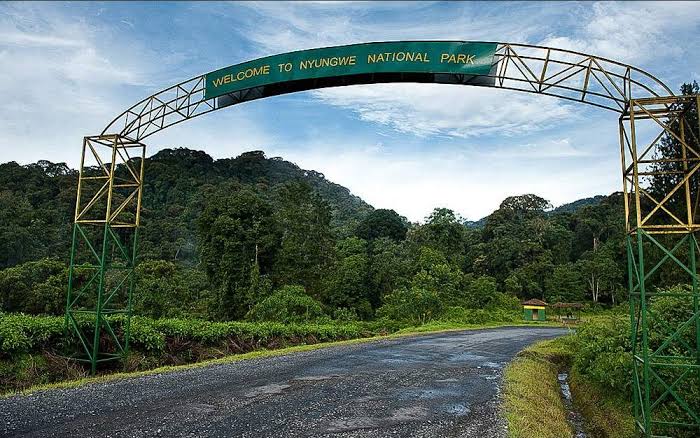
Rwanda's tea plantations cluster along the edges of Nyungwe National Park, especially around Gisakura, where the forest gives way to bright green terraces climbing the hillsides. Estates here are working farms, not tourist sites built for visitors, but several welcome short walking visits and tastings. A stop of thirty minutes to an hour fits easily alongside a Nyungwe trek.
Table of Contents
- Where forest meets farmland
- Why tea grows so well here
- What the estates actually look like
- Visiting an estate: what to expect
- Best time of day and season
- Combining a tea visit with Nyungwe trekking
- What the estates mean for local communities
- Other primates and wildlife near the estates
- Buying tea to take home
- Getting to the estates from other parts of Rwanda
- Estate visits as part of a longer Nyungwe wildlife trip
- What distinguishes Rwandan tea from tea grown elsewhere
- Mistakes to avoid
- Frequently Asked Questions
Where forest meets farmland
Approach Nyungwe National Park from almost any direction and the transition is dramatic: dense rainforest gives way, often within a few hundred metres, to open hillsides planted with row after row of tea. The Gisakura area, on the park's western edge, holds some of the most extensive and easily visited estates, and the contrast between wild forest and cultivated terrace is one of the more striking landscapes in Rwanda's west. For an overview of the park these estates border, see our Nyungwe National Park guide.
This guide covers how the tea here is grown, what a visit to an estate involves, and how to fit one into a Nyungwe itinerary without disrupting your trekking plans.
Why tea grows so well here
Tea favours cool, high-altitude conditions with consistent rainfall, and the hills bordering Nyungwe provide exactly that combination. The same elevation and rainfall that sustain the rainforest's biodiversity also make the surrounding slopes ideal for tea cultivation, which is why estates have grown up along the park boundary rather than in the lower, drier parts of the country.
Tea bushes are kept deliberately low and wide through regular pruning, which makes the leaf flush easier for pickers to reach and encourages the plant to produce more new growth at picking height.
What the estates actually look like
From a distance, a tea estate on these hillsides appears as a solid block of bright green, but up close the bushes are planted in narrow rows separated by footpaths, following the contour of the slope to reduce erosion. Pickers move along these rows working by hand, since Rwanda's tea is still largely hand-picked rather than machine harvested on hilly terrain like this. The visual effect, especially in early morning light, is one of the more photographed scenes in this part of the country.
Visiting an estate: what to expect
Most tea estates near Nyungwe are working farms first and visitor attractions second, so a visit typically means a walk along the estate roads and footpaths with a guide, rather than a formally staged tour. Depending on the estate and the season, you may be able to watch pickers at work, learn how the leaf is graded, and see the first stages of processing if a nearby factory allows visits.
| What you might see | Typical duration | Notes |
|---|---|---|
| Walk among the bushes | 20 to 30 minutes | Best in the morning when pickers are active |
| Talking with pickers | 10 to 15 minutes | Depends on willingness and language |
| Factory viewing | 20 to 40 minutes | Not always available, ask in advance |
| Tasting | 10 to 15 minutes | Offered at some estates only |
For a more structured version of this experience, with a set route and guided explanation of processing, our tea estate tour guide covers what a booked visit involves rather than an informal roadside stop.
Best time of day and season
Morning is the best time to see pickers actively working the bushes, since harvesting typically happens earlier in the day before the heat of midday. Tea is grown year round in this climate, so there is no single best season for a visit, though the light for photography is generally most favourable in the hours after sunrise.
If photographs of the terraces matter to you, ask your guide to plan the estate stop for the first hour after sunrise, when the light rakes across the rows and picks out their contour lines clearly.
Combining a tea visit with Nyungwe trekking
Because the estates sit right at the park boundary, a stop here fits naturally either before or after a morning trek. Many visitors combine it with a colobus monkey trek, since the same trailhead area often borders estate land, and our guide to Nyungwe's colobus monkeys covers that activity in detail. Others prefer to save the estate visit for an afternoon after a trek, when energy for a gentle walk is more welcome than another steep forest trail.
If your schedule allows a full rest day within a longer Nyungwe stay, a tea estate visit combined with a relaxed lunch is a pleasant, low-effort way to use it.
What the estates mean for local communities
Tea growing is a significant source of employment in the communities bordering Nyungwe, and picking work supports many households in the area. Approaching a visit with this in mind, rather than treating it purely as a photo opportunity, makes for a more respectful and more interesting exchange with the people actually working the land.
If you want to speak with pickers or take photographs of them at work, ask your guide to make the introduction rather than approaching directly. This is both more courteous and more likely to lead to an actual conversation.
Other primates and wildlife near the estates
The forest edge bordering the estates is itself good habitat for some of Nyungwe's more visible wildlife, and it is not unusual to see monkeys moving along the tree line close to cultivated land. Our broader guide to the 13 primates of Nyungwe Forest covers the species most likely to be seen in this transitional zone between forest and farmland.
Buying tea to take home
Some estates or nearby shops sell packaged tea directly, offering a straightforward way to bring a genuine local product home rather than a generic souvenir. Prices and availability vary by estate and season, so ask your guide which options are currently open to visitors on the day of your trip.
Getting to the estates from other parts of Rwanda
Most visitors reach the Gisakura tea estates as part of a wider Nyungwe stay rather than as a standalone destination, since the estates border the park and lodges in the area are geared toward exactly this combination. If you are approaching from Lake Kivu, the final stretch of the Lake Kivu to Nyungwe drive passes directly through tea country, making the estates one of the last landmarks before the road climbs into the forest proper. Travellers coming from Kigali or the south typically arrive with enough daylight left for an estate stop on the same day, provided the drive itself starts reasonably early.
Estate visits as part of a longer Nyungwe wildlife trip
Because the estates sit at the immediate edge of the park, a tea visit is easy to fold into a trip built primarily around wildlife. Our 6-day Rwanda primate safari includes time in Nyungwe alongside gorilla trekking further north, and a tea estate stop is a natural, low-effort addition on a travel day between activities rather than requiring a dedicated excursion of its own. Guides on these itineraries are generally happy to build in a short stop if you ask in advance, since the detour from the main park road is minimal.
What distinguishes Rwandan tea from tea grown elsewhere
Rwanda's high-altitude, volcanic soil growing conditions are broadly similar to other major East African tea regions, but the specific combination of elevation, rainfall and soil around Nyungwe's edge produces tea that specialists in the industry consider distinctive in character. Much of what is grown here is destined for export through established regional auction and trading systems, meaning the tea you see picked on a hillside near Gisakura may travel a considerable distance before it reaches a cup anywhere in the world.
Mistakes to avoid
Do not expect a formally staged tourist experience at every estate, since many are simply working farms that tolerate respectful visitors rather than businesses built around tourism. Do not plan a factory visit without checking availability first, since not every estate allows visitors inside processing buildings. And do not rush the stop, since the appeal of a tea estate visit is in its unhurried pace, a contrast to the more physically demanding activities elsewhere in a Nyungwe itinerary.
Frequently Asked Questions
Can I visit a tea estate near Nyungwe without a guide?
It is possible in principle, but a guide who knows the estate and speaks the local language makes for a far more informative and welcoming visit, and helps arrange access to areas like processing buildings.
Is there an entrance fee for tea estate visits?
Arrangements vary by estate, and some informal roadside stops require no fee at all. Ask your operator to confirm what applies to the specific estate on your itinerary.
What is the best time of day to see pickers at work?
Morning, generally before midday, is when harvesting activity is at its most visible, making it the best window for both viewing and photography.
Can I buy tea directly from an estate?
Some estates or nearby shops sell packaged tea to visitors, though availability varies. Ask your guide in advance which options are open on the day you plan to visit.
How long should I plan for a tea estate stop?
Thirty minutes to an hour is typical for an informal walk among the bushes, while a more structured tour with processing and tasting can take longer.
Does a tea estate visit work well combined with a Nyungwe trek?
Yes, many estates sit close to the park's trailheads, making a stop a natural addition either before or after a morning trek without adding significant travel time.