
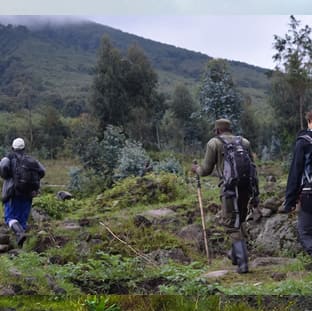
Pack waterproof, ankle-supporting hiking boots (already broken in), long trousers tucked into socks, a long-sleeved shirt, gardening gloves for gripping vegetation, a waterproof rain jacket, and a daypack with water and a snack. Hire a local porter for your bag rather than carrying everything yourself; it's affordable and helpful on steep, muddy sections.
Table of Contents
Footwear
Waterproof, ankle-supporting hiking boots are essential given the muddy, uneven volcanic terrain. Break them in before your trip; new boots on trek day is a recipe for blisters. Bring a second, lighter pair of shoes for the evenings at your lodge, since trekking boots are rarely pleasant to wear once you're back and cleaned up.
Clothing
- Long trousers tucked into socks (protection against stinging nettles and insects)
- A long-sleeved shirt in a neutral colour
- A waterproof, breathable rain jacket
- A warm mid-layer for cool mornings at altitude
- A change of clothes to leave in the vehicle for the drive back, since trekking gear is often muddy by the end
"Rwanda has quietly become a bucket-list destination. Pack for cold, wet, high-altitude forest regardless of season."
Gear
- Gardening gloves for gripping vegetation on steep sections
- A daypack with at least 1.5 litres of water and a light snack
- Camera with a spare battery (charging opportunities can be limited on trek day)
- A basic first aid kit and any personal medication
- Insect repellent and sun protection
- Trekking poles, if you use them (some lodges rent these, but bringing your own guarantees a fit you're used to)
- A dry bag or waterproof phone pouch for sudden rain showers
Check current fitness expectations in our gorilla trekking fitness level guide before your trip, since terrain difficulty varies considerably by which gorilla family you're assigned to visit.
Hiring a Porter
Hiring a local porter to carry your daypack is one of the most useful, and most overlooked, packing decisions trekkers make. Porter fees are modest and paid directly at the trailhead; confirm the current rate with your guide on the day. Beyond the practical help on steep terrain, porter fees are a meaningful direct income source for the local community and are widely encouraged by park authorities and tour operators alike.
Packing by Season
Volcanoes National Park sits at high altitude and stays cool and often damp year-round, so the core packing list doesn't change dramatically by season, but rain likelihood does. Rwanda's wetter months bring a higher chance of trail mud and sudden downpours, making a genuinely waterproof (not just water-resistant) jacket and boots more important than during drier stretches. Check our month-by-month weather guide to see what conditions to expect for your specific travel dates, and pack rain protection regardless of season, since forest weather at altitude can shift quickly even in drier months.
What to Leave at Home
Leave bright or dark blue clothing at home (bright colours can startle wildlife; dark blue attracts tsetse flies), and skip the flash photography; it's not permitted near the gorillas. Leave heavy, hard-shell luggage at your lodge too; only a daypack goes on the actual trek, and oversized bags simply become dead weight for whoever is carrying them.
Review the full gorilla trekking rules and etiquette guide before your trip, since several packing choices, such as colour, noise and scent, connect directly to park conduct rules rather than just comfort.
See our full gorilla trekking guide for the complete trekking experience.
The Night Before: Final Checklist
The evening before your trek, lay out your gear rather than packing at dawn: boots, socks, trousers, layers, gloves, rain jacket, daypack contents, camera battery charged, permit and passport ready for the ranger briefing. Confirm your pickup time with your guide, and set out cash for your porter and ranger tips in a separate, easily accessible pocket so you're not digging through a full pack at the trailhead.
It's also worth deciding the night before what stays behind entirely. Jewellery, valuables you don't need on the trail, and anything you'd be upset to lose in mud or a sudden downpour are better left locked in your room safe than carried along "just in case." A trekking day is long and physical, and a lighter daypack makes a real difference by the third or fourth hour on steep terrain.
What's Worth Buying Locally vs. Bringing From Home
Specialist trekking gear, such as genuinely waterproof boots, a proper rain shell, and gloves sized to fit, is worth sourcing before you travel, since selection in Rwanda's towns is limited and fit matters on a physical trek. Items like bottled water, snacks, insect repellent, and basic first-aid supplies, on the other hand, are easy to pick up in Kigali or Musanze and don't need to take up suitcase space on the way over. Cash for tips is best sourced from an ATM or bureau de change on arrival rather than carried in bulk from home.
Frequently Asked Questions
Do I need special hiking boots?
Waterproof, ankle-supporting boots that are already broken in are strongly recommended given the muddy, uneven volcanic terrain.
Should I bring my own porter gear or hire one?
Hiring a local porter for your bag is recommended over carrying everything yourself. It's affordable and supports the local community.
Do I need to buy special expedition-grade gear for this trek?
No, a good rain jacket, broken-in hiking boots, and layered clothing are sufficient. This isn't a technical mountaineering trek, and most packing items are things travellers already own or can rent locally.
Can I rent gaiters, trekking poles, or rain gear locally?
Some lodges and tour operators offer rental gear, but availability varies. Confirm with your operator ahead of time if you're relying on rented rather than personal equipment.
What should I do with my luggage on trek day?
Only a daypack goes on the actual trek. Leave your main luggage at your lodge or in the vehicle, and pack just what you need for the day: water, snack, camera, first aid kit, and rain gear.
Is it cold on the trek, even though Rwanda is near the equator?
Yes, Volcanoes National Park sits at high altitude, so mornings are cool and conditions inside the forest can be damp and chilly regardless of season. Layered clothing is essential.
How heavy should my daypack actually be?
As light as you can reasonably manage: water, a snack, camera, basic first aid, and rain protection is usually enough. Anything beyond that is a good candidate for hiring a porter rather than carrying yourself.
Do children need different gear for gorilla trekking?
The same core list applies, scaled to size; properly fitted boots matter even more for smaller feet, since ill-fitting footwear causes problems faster on uneven terrain. Confirm current minimum age requirements and any child-specific guidance with your operator before booking.