
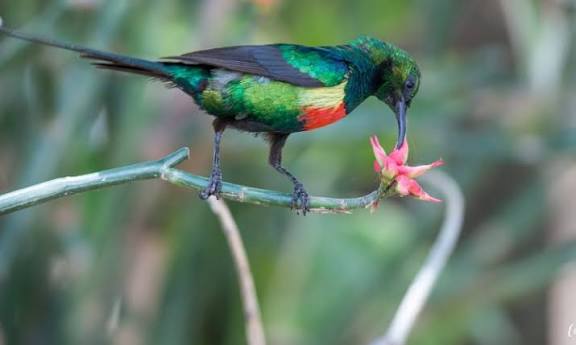
Kigali holds several accessible wetlands and green spaces where a morning walk can produce 30 or more bird species without a long drive. Nyandungu Eco-Park and Umusambi Village are the two most reliable starting points, best visited early morning with binoculars and a local guide who knows the current hotspots.
Table of Contents
- Kigali is a better birding city than most visitors expect
- Where to go in the city
- Nyandungu Eco-Park
- Umusambi Village
- What you can realistically see
- Timing your visit
- What to bring
- Why a local guide matters more in a city than elsewhere
- Combining a Kigali morning with a wider birding trip
- Fitting a birding walk around other plans
- Mistakes to avoid
- How Kigali's wetlands fit into the city's wider story
- Photography tips for Kigali's wetland birds
- Fitting a birding morning around a business trip
- Frequently Asked Questions
Kigali is a better birding city than most visitors expect
Travellers heading to Rwanda for gorillas or Akagera's savanna often assume birding starts once they leave the capital. In fact, Kigali sits within a network of valley wetlands that were historically farmed or degraded and have since been restored, and these sites now support a genuine range of species without requiring a drive out of town. A free morning in the city is enough for a worthwhile birding walk, not just a wait for the next flight.
For a guided version of this, matched to the season and to species you specifically want to find, our Rwanda birdwatching tours team runs half-day city birding walks alongside longer countryside itineraries.
Where to go in the city
| Site | Habitat | What it suits |
|---|---|---|
| Nyandungu Eco-Park | Restored valley wetland, walking trails | Half-day walks, good variety |
| Umusambi Village | Managed wetland reserve | Crowned cranes plus wild wetland birds |
| Various valley marshes | Mixed marsh and grassland | Casual, unguided walks near residential areas |
Nyandungu and Umusambi are the two sites most visitors reach easily and safely with a guide, and both have defined paths rather than open marsh, which keeps a visit practical for non-specialists.
Nyandungu Eco-Park
Nyandungu is a restored wetland on Kigali's edge, developed from what was previously degraded farmland and informal settlement into a network of walking trails, ponds and planted vegetation. The restoration has brought back a range of wetland and woodland-edge birds, and the site's walking paths make it accessible without wading into marsh.
Arrive within the first hour after the park opens. Activity drops noticeably as pedestrian traffic and heat both increase through the morning.
Umusambi Village
A short drive from the centre, Umusambi Village combines a rehabilitated population of grey crowned cranes, rescued from illegal private ownership, with a genuinely active wild bird population drawn to the same restored wetland. Our full guide to Umusambi Village covers what a visit involves and how the crane rehabilitation programme works.
What you can realistically see
Kigali's wetlands attract a broad mix of herons, egrets, weavers, cisticolas and waterfowl, along with occasional raptors overhead. Species diversity is genuinely good for an urban environment, though it does not match the specialist habitat of a dedicated wetland further afield.
A single morning walk across Nyandungu or Umusambi can realistically produce 30 or more species for a visitor with a guide, weather and season permitting.
Timing your visit
Early morning, from first light to around 9am, is consistently the best window across all of Kigali's sites, as it is almost everywhere in East Africa. Heat and human activity both rise through the day, pushing birds into cover. A second, shorter window opens in the late afternoon as temperatures drop, though morning remains the more productive choice if you can only manage one visit.
What to bring
- Binoculars: essential, since many species are small and active in dense vegetation
- Neutral-coloured clothing, avoiding bright colours that can disturb birds at close range
- Closed shoes suited to damp ground near ponds and marsh edges
- A local guide, since knowing which trail has had recent activity saves considerable time
Why a local guide matters more in a city than elsewhere
In a national park, trails are limited and wildlife is somewhat predictable by habitat zone. In an urban wetland, activity shifts day to day depending on disturbance, recent rain and even construction nearby. A guide who walks these sites regularly knows where birds have been active in the past week, which matters more here than in a larger, more stable wilderness area.
Combining a Kigali morning with a wider birding trip
Visitors with more time often use a Kigali morning as the first stop in a longer birding itinerary. Our guide to Rugezi Wetland, roughly three hours north, covers Rwanda's best site for the rare Grauer's swamp warbler, while our birds of Akagera piece lists species from the country's main savanna park. Anyone hoping for a shoebill sighting should also read our honest expectations guide, where to see the shoebill in Rwanda, since Kigali itself is not a reliable site for that particular bird.
For a packaged half-day version of everything above, see our Kigali Wetland Birding Tour.
Fitting a birding walk around other plans
Because Kigali's sites are close to the centre and generally take two to three hours to cover properly, a birding walk fits comfortably around a business trip, a layover, or the morning before an evening flight. It requires far less logistical planning than a countryside excursion, which is part of its appeal to visitors with limited free time.
Mistakes to avoid
The most common mistake is visiting mid-morning or afternoon and being disappointed by low activity that would have been strong at dawn. The second is skipping a guide to save a small cost and then walking past birds that a trained eye would have picked out immediately. The third is wearing bright clothing or moving quickly through the trails, both of which push birds further from view.
How Kigali's wetlands fit into the city's wider story
Nyandungu and Umusambi are both part of a broader effort in Kigali to restore urban wetlands that had, over previous decades, been encroached on by informal settlement, farming and waste dumping. The restoration of these sites was driven partly by flood management concerns, since wetlands absorb and filter rainwater that would otherwise strain the city's drainage system, and partly by a wider push to make Kigali greener and more liveable. The return of bird populations to these sites is, in effect, a visible sign that the restoration is working.
This context is worth knowing before your visit, since it reframes what you are looking at. A morning spent birding in Nyandungu is also a walk through one of the clearer examples of Kigali's environmental planning, and guides on site are often well placed to explain both the ecology and the city planning behind it.
Photography tips for Kigali's wetland birds
Boardwalk trails put you closer to water birds than open grassland typically allows, which rewards a telephoto lens if you are travelling with one. Early morning light is softer and more flattering for photography than the harsher light of midday, another reason the same window that produces the best sightings also produces the best images. Move slowly along the boardwalk rather than walking at a normal pace, since sudden movement is what most often flushes birds before you can raise a camera.
If you only have room for one lens, a mid-range zoom in the 100 to 400mm range covers most situations at Nyandungu and Umusambi, from close crane portraits to more distant waterfowl on open ponds.
Fitting a birding morning around a business trip
Kigali hosts a growing number of conferences and business visitors, and a birding walk is one of the more practical ways to use a free morning between meetings. Both Nyandungu and Umusambi are close enough to central hotels that a return trip, including the walk itself, can be managed in under three hours, which is realistic even around a packed schedule. Arranging a guide the evening before, rather than on the morning itself, avoids losing part of that window to logistics.
Delegates attending events at the Kigali Convention Centre in particular have found this an easy way to see a different side of the city before or after the formal programme, without needing a full day away from work commitments.
Families staying in Kigali for only a night or two, perhaps before or after a longer countryside itinerary, can use the same short window productively, since neither site demands the fitness or time commitment of a full national park excursion.
Frequently Asked Questions
Can I go birdwatching in Kigali without leaving the city?
Yes. Sites such as Nyandungu Eco-Park and Umusambi Village are within or close to the city and support a genuine range of wetland and woodland-edge species without a long drive.
What is the best time of day for birdwatching in Kigali?
Early morning, from first light to around 9am, gives the most activity. A shorter secondary window opens in the late afternoon as temperatures cool.
Do I need a guide for Kigali's birding sites?
A guide is strongly recommended, since local knowledge of which trail has had recent activity makes a significant difference in an urban wetland where conditions change frequently.
How many bird species can I expect to see in a morning?
A well-timed guided walk across Nyandungu or Umusambi can realistically produce 30 or more species, depending on season and weather.
Is Kigali birdwatching a substitute for a trip to Akagera or Rugezi?
Not fully. Kigali's sites offer good variety for an urban environment, but specialist habitats like Rugezi's papyrus marsh or Akagera's savanna and lake edges hold species not found in the city.