
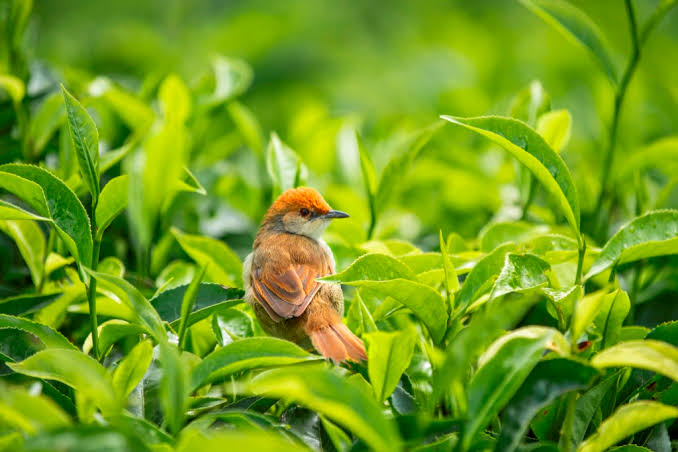
Akagera National Park combines savanna, acacia woodland, open water and papyrus edge, which gives it one of the broadest bird lists of any Rwandan park. Expect raptors over open grassland, herons and storks along Lake Ihema, and papyrus specialists in the reed beds, best seen on an early morning game drive or boat trip.
Table of Contents
- Why Akagera's bird list is so long
- The 20 species worth watching for
- Savanna and grassland birds
- Woodland and acacia birds
- Water birds on Lake Ihema
- Papyrus edges and the shoebill question
- Best time of year for birding in Akagera
- How to structure a birding-focused visit
- Combining Akagera with Rwanda's other birding sites
- Equipment for Akagera birding
- How Akagera's birdlife compares across the day
- Working with your guide to prioritise birds
- What to expect if you are combining birding with a big-game safari
- Frequently Asked Questions
Why Akagera's bird list is so long
Most visitors come to Akagera for the big game, lions, elephants, rhinos and the rest, and the birdlife is easy to overlook in the excitement of a first game drive. That is a mistake. Akagera's habitat mix, savanna grassland, acacia woodland, open lake water and dense papyrus, supports a wider range of bird species than almost anywhere else in Rwanda, simply because so many different habitat types sit within one park.
For a trip built with birding specifically in mind, alongside the standard game drive, our Rwanda birdwatching tours team can adjust timing and routes to prioritise sightings over pure game viewing.
The 20 species worth watching for
Rather than an exhaustive checklist, this is a realistic set of species most visitors have a genuine chance of finding across a two or three day stay, grouped by habitat.
| Habitat | Species to look for |
|---|---|
| Open savanna and grassland | Various raptors, bustards, larks, secretary bird (uncommon but possible) |
| Acacia woodland | Hornbills, barbets, shrikes, sunbirds |
| Lake Ihema and open water | Herons, egrets, African fish eagle, cormorants, pelicans |
| Papyrus and reed edges | Weavers, jacanas, occasional shoebill |
Savanna and grassland birds
Open grassland is where Akagera's raptors are most visible, since there is little cover to hide behind. Watch fence posts, dead trees and the ground itself on quieter stretches of track, where several species of bustard and courser are commonly found moving through short grass. A morning game drive dedicated partly to birding, rather than only scanning for mammals, regularly turns up species that a mammal-focused drive would miss entirely.
Ask your driver-guide to slow down near termite mounds and isolated trees in open grassland. Raptors use these as lookout perches and are often visible from a distance before you would spot them on the ground.
Woodland and acacia birds
Akagera's acacia woodland, particularly in the park's drier zones, holds a good range of hornbills, barbets and sunbirds, along with several shrike species that favour thorny cover. These birds are generally more vocal than visible, so learning even a handful of common calls before your trip helps a guide confirm what you are hearing.
Water birds on Lake Ihema
Lake Ihema is Akagera's most productive single birding site, holding a dense population of herons, egrets, cormorants and the African fish eagle, whose distinctive call is one of the defining sounds of an Akagera boat trip. A dedicated boat safari on the lake gives closer views of water birds than a shore-based game drive, and it is worth building into any Akagera itinerary with birding as a priority.
The African fish eagle's call, a loud, ringing cry usually given from a perch near open water, is often described as one of the characteristic sounds of African lakes, and Lake Ihema is one of the more reliable places in Rwanda to hear it.
Papyrus edges and the shoebill question
Where the lake meets dense papyrus, a different set of species appears, including several weavers and jacanas that depend on floating and emergent vegetation. This habitat is also where the shoebill, Africa's most sought-after wetland bird for many visiting birders, has occasionally been recorded in Akagera. Expectations should be realistic here: our honest guide to where to see the shoebill in Rwanda explains why this is a genuinely difficult bird to guarantee anywhere in the country, Akagera included.
Best time of year for birding in Akagera
Akagera can be birded year round, but the wet seasons bring migrant species that add meaningfully to the park's list, alongside resident birds that are present throughout the year. Dry season game drives are more comfortable and give easier road access, while wet season visits can produce a longer species count for dedicated birders willing to accept muddier tracks.
How to structure a birding-focused visit
- Start the first game drive at first light, when both mammal and bird activity peak
- Book a boat safari on Lake Ihema specifically for water birds, rather than treating it only as a scenic add-on
- Ask for a guide with specific birding experience, not only general game-driving experience
- Allow at least two full days, since a single day rushes past habitat types that reward slower attention
Combining Akagera with Rwanda's other birding sites
Visitors building a dedicated birding trip often pair Akagera with Kigali's urban wetlands en route, covered in our guide to birdwatching in Kigali's wetlands, or with a stop at Umusambi Village for the grey crowned crane. For papyrus specialists that Akagera does not reliably offer, Rugezi Wetland in the Northern Province remains the better bet.
For the standard safari that most birding add-ons are built around, see our 2-day Akagera safari.
Equipment for Akagera birding
Bring binoculars suited to both open grassland, where distance matters, and dense papyrus, where quick focus on close, moving subjects matters more. A spotting scope adds real value on the lake, where waterbirds often sit at a distance on open water, but is less useful once you move into thicker vegetation.
How Akagera's birdlife compares across the day
Bird activity in Akagera follows a rhythm shaped by heat as much as by species behaviour. The first two hours after sunrise are consistently the most productive, with raptors beginning to hunt, woodland species most vocal, and water birds active along the lake edge before the day's heat sets in. Activity dips through the middle of the day, when many species retreat into shade, before picking up again in the last hour or two before sunset. Structuring a day around these windows, rather than a single long midday drive, makes a real difference to what you see.
| Time of day | Typical activity level | What to prioritise |
|---|---|---|
| First light to mid-morning | High | Grassland raptors, woodland birds, lake edges |
| Midday | Low | Rest, vehicle transfers, lodge time |
| Late afternoon to dusk | Moderate to high | Return to water and open grassland |
Working with your guide to prioritise birds
Not every Akagera guide leads with birding by default, since many visitors arrive primarily hoping for lions, elephants and rhinos. If birds are a real priority for you, say so clearly at the start of the trip rather than assuming it will happen naturally alongside game viewing. A guide briefed to stop for birds, not just mammals, will handle the pace of a drive very differently, lingering at water bodies and slowing through woodland rather than driving purposefully toward the next big sighting.
Building a simple list of five or six species you most want to see, shared with your guide before the first drive, focuses everyone's attention far better than a vague request to see some birds along the way.
What to expect if you are combining birding with a big-game safari
Most visitors to Akagera are not purely birders, and a well-run itinerary balances both interests rather than favouring one entirely. A typical structure gives you an early morning game drive that naturally covers strong birding terrain on the way to open grassland where predators and grazing animals are more active, followed by a midday rest, then a boat safari or afternoon drive weighted more toward water birds and a quieter pace. This structure keeps everyone in the vehicle satisfied without turning the trip into either a rushed mammal checklist or an overly slow birding crawl.
Couples or families with mixed interests often find this balance works better than choosing one focus exclusively, since Akagera's habitat diversity genuinely supports both goals within the same few days.
Photographers in particular benefit from this mixed pace, since the slower birding stretches allow time to set up a shot properly, something a fast-moving drive chasing mammal sightings rarely permits.
Frequently Asked Questions
What is the best time of year to see birds in Akagera?
Akagera can be birded year round. The wet season adds migrant species to the resident population, while the dry season offers easier road access and more comfortable game drives.
Do I need a specialist birding guide for Akagera?
A guide with specific birding experience makes a real difference, since spotting species in dense papyrus or fast-moving raptors in open grassland both require trained eyes. Standard game-drive guides can still point out common species.
Is the boat safari worth it for birdwatching?
Yes. Lake Ihema's boat safari gives close views of herons, cormorants, the African fish eagle and other water birds that are harder to approach from the shore or a vehicle.
Can I see the shoebill in Akagera?
Occasionally, though sightings are not reliable anywhere in Rwanda. Treat it as a possible bonus rather than a planned outcome of your visit.
How many bird species might I see on a two-day Akagera trip?
A well-planned two-day visit with a knowledgeable guide can realistically cover a wide range of the park's habitat types and produce a substantial species count, though exact numbers vary by season and effort.