
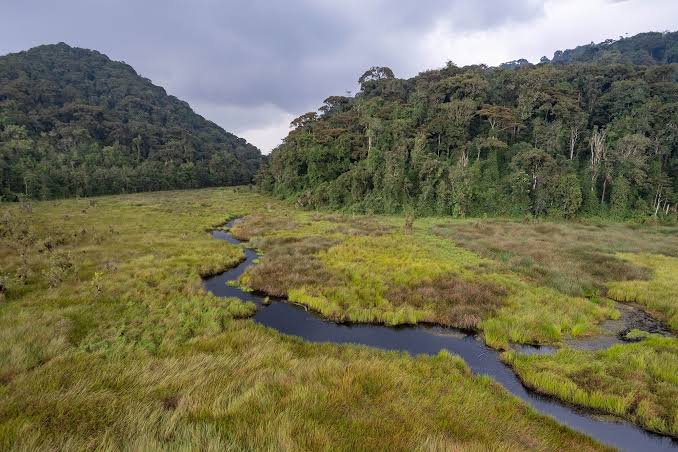
Kamiranzovu swamp is a distinctive wetland habitat within Nyungwe's forest, reached via a moderate trail through dense rainforest that opens into open marshland with a winding stream. The name is associated with elephants in local naming tradition, reflecting the area's historical connection to the forest elephants that once ranged here. It's best paired with other Nyungwe activities rather than treated as a standalone destination.
Table of Contents
What Kamiranzovu Actually Is
Kamiranzovu is a true wetland within Nyungwe's rainforest: open marshland with a stream winding through tall grasses, framed by forested hills on either side. This is a real departure from the closed-canopy forest that defines most of the park, and that contrast is exactly what makes the trail worth including in a Nyungwe itinerary rather than skipping in favour of purely forest-based hikes.
What the Name Means
Kamiranzovu's name is associated with elephants in local naming tradition, a linguistic echo of the forest elephants that historically ranged through this part of Nyungwe. As covered in our Nyungwe wildlife guide, elephant sightings in the park today are extremely rare to nonexistent, so the name is best understood as a piece of the area's history rather than a current wildlife expectation.
"A real departure from the closed-canopy forest that defines most of the park."
The Trail Itself
The route to Kamiranzovu passes through dense forest before opening into the swamp itself, generally considered a moderate trail involving some uneven, potentially muddy terrain typical of wetland-adjacent hiking rather than significant elevation gain. Confirm current trail length, duration and fee with your guide or the park authority when booking, since maintained routes and access can shift over time.
Wildlife at the Swamp
The open wetland habitat draws a different mix of species than the surrounding forest, particularly birds that favour marsh and grassland edges over dense canopy. See our Nyungwe birdwatching guide for how to make the most of a birding-focused visit here specifically, since the habitat shift noticeably changes what you're likely to see compared to a standard forest trail.
How It Compares to Nyungwe's Other Habitats
Most of Nyungwe's trails move through variations of the same closed-canopy forest environment, which is part of what makes Kamiranzovu well worth a detour rather than a repetitive addition to your itinerary. Travellers who've already covered a waterfall trail and a forest hike get real, visible variety from adding this wetland leg, rather than three days of visually similar forest walking.
Practical Tips for Visiting
Waterproof footwear matters even more here than on standard forest trails, given the wetter, more exposed underfoot conditions near the marsh itself. Insect repellent is worth packing specifically for this trail too, since standing water and marsh grass habitats tend to support more insect activity than the drier forest interior.
A Different Plant Community Worth Noticing
Kamiranzovu's marsh grasses and wetland vegetation represent a clearly distinct plant community from the towering hardwood forest that dominates most of Nyungwe, and travellers with any interest in botany will notice the shift immediately on arrival at the open swamp. This kind of habitat transition (dense forest giving way abruptly to open wetland) is relatively rare within a single park visit and adds real textural variety to a trip that might otherwise consist entirely of forest-interior hiking.
The transition zone between forest and swamp is often where the most varied plant life concentrates, since edge habitats typically support species from both adjoining ecosystems. A guide with botanical knowledge can point out these transitional species specifically if this is a particular interest of yours, worth mentioning when booking if it matters to you.
Photography at Kamiranzovu
The open sky and reflective water at Kamiranzovu offer a distinctly different photographic subject from the closed-canopy shots typical of most Nyungwe trails, where dense foliage often limits both light and composition options. Morning visits generally offer the best light here, with mist sometimes lingering over the marsh in a way that photographs particularly well, similar to the misty canopy views elsewhere in the park.
Frequently Asked Questions
What does the name Kamiranzovu mean?
Kamiranzovu is associated with elephants in local naming tradition, reflecting the swamp's historical connection to the forest elephants that once ranged through the area.
How long is the hike to Kamiranzovu swamp?
Trail length and duration vary; confirm current trail specifics with your guide or the park authority when booking, since maintained routes can shift over time.
Is the Kamiranzovu trail difficult?
It's generally considered a moderate trail, involving some uneven and potentially muddy terrain typical of wetland-adjacent forest hiking rather than steep elevation gain.
What wildlife can I see at Kamiranzovu swamp?
The swamp's open wetland habitat attracts different bird species than the surrounding dense forest, along with occasional sightings of forest wildlife drawn to the water source.
Why is Kamiranzovu different from other Nyungwe habitats?
It's a genuine wetland habitat within a montane rainforest park, offering a distinctly different landscape and wildlife mix from the surrounding closed-canopy forest.
Should I combine Kamiranzovu with other Nyungwe activities?
Yes. It pairs well with a broader multi-day Nyungwe itinerary rather than being a standalone destination, since the trail itself is relatively short compared to a full day's activity.
Is Kamiranzovu worth visiting for photography?
Yes. The open sky and reflective water offer a distinctly different photographic subject from the closed-canopy shots typical of most Nyungwe trails, particularly in morning light.