
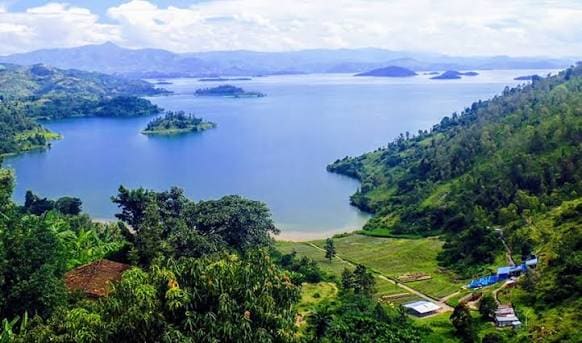
Rusizi district, centred on the town of Kamembe, sits at Lake Kivu's southern end near the border with Bukavu in the Democratic Republic of Congo. It is the quietest of the lake's three main areas, valued for its access to the Congo Nile Trail and its proximity to Nyungwe National Park rather than for beach resorts.
Table of Contents
- Rusizi district and the town of Kamembe
- Getting to Rusizi from Kigali
- Rusizi as the southern end of the Congo Nile Trail
- The lake at its quietest
- Combining Rusizi with Nyungwe National Park
- Where to stay in Kamembe
- What to do around Rusizi beyond the trail
- A practical two-day plan
- Mistakes to avoid
- Border life and daily rhythm in Kamembe
- Weather and timing your visit
- Frequently Asked Questions
Rusizi district and the town of Kamembe
Rusizi is the district at the southern end of Lake Kivu, and Kamembe is its main town, functioning as the practical hub for travellers passing through. The area was long associated with the name Cyangugu, still heard in conversation, though Rusizi is the current official designation for the district. Kamembe sits close to the border with Bukavu in the Democratic Republic of Congo, a border this guide covers only from the Rwandan side.
For context on how Rusizi fits alongside Rwanda's other lake towns, our Lake Kivu tours page compares it with Rubavu and Karongi further north.
Getting to Rusizi from Kigali
The drive from Kigali to Rusizi is the longest of the routes to Lake Kivu's three main towns, running either along the lakeside road through Karongi or via Nyungwe National Park's forest road, depending on your route and stops along the way. Both options are tarmac for the most part, and the choice usually comes down to whether you want lake views or forest along the drive.
Many travellers reach Rusizi as the final leg of a longer west to south itinerary rather than a direct trip from Kigali. Our guide to the Lake Kivu to Nyungwe drive covers this route in detail, including where the road runs closest to the shoreline.
Rusizi as the southern end of the Congo Nile Trail
Rusizi marks one end of the Congo Nile Trail, the long-distance hiking and cycling route that follows much of Lake Kivu's western shoreline. Travellers doing the trail in sections, or attempting the full route, typically start or finish in this area, making Kamembe a natural base for a night before or after time on the trail. Our Congo Nile Trail page covers what the route involves and how to plan a multi-day section.
If you are only doing a short section of the trail rather than the full route, ask your operator about starting from Rusizi and heading north, which lets you finish somewhere with more accommodation choice.
The lake at its quietest
Compared with Rubavu's beach culture and Karongi's island boat trips, Rusizi's stretch of Lake Kivu is the least developed for conventional tourism. The shoreline here is shaped by fishing communities and the terraced hills that run down to the water, similar in character to what you find further north but with fewer visitors passing through. Our explainer on Lake Kivu facts is useful background wherever you are on the lake, covering the geology behind its depth and gas layers, features that apply to this southern stretch as much as anywhere else on Kivu.
| Feature | Rusizi and Kamembe | Rubavu | Karongi |
|---|---|---|---|
| Development for tourism | Lowest | Highest | Moderate |
| Main draw | Congo Nile Trail, Nyungwe access | Beaches, hot springs | Islands, quieter lake time |
| Typical visitor | Trail hikers, Nyungwe travellers | Weekend and beach travellers | Travellers wanting fewer crowds |
A fuller side-by-side look is in our Rubavu, Karongi and Rusizi comparison, which weighs the three towns against each other for different kinds of trips.
Combining Rusizi with Nyungwe National Park
One of the strongest reasons to include Rusizi in a Rwanda itinerary is its proximity to Nyungwe National Park, home to chimpanzee trekking and the country's largest remaining montane rainforest. A stay in Kamembe works well as a base for reaching the park, or as a stopover on a route that continues from the lake into the forest. If Lake Kivu and Nyungwe are both on your list, see how a combined trip is typically structured before you book individual pieces.
Nyungwe's forest and Lake Kivu's shoreline sit close enough together that many travellers cover both in a single loop, rather than treating them as separate trips requiring a return to Kigali in between.
Where to stay in Kamembe
Accommodation in Kamembe is more limited than in Rubavu or Karongi, reflecting the lower volume of leisure travellers passing through. Options tend toward simple guesthouses and a small number of more established hotels, rather than a wide resort-style range. Book ahead where possible, since room numbers here are smaller than in the lake's more visited towns.
What to do around Rusizi beyond the trail
Beyond the Congo Nile Trail and Nyungwe access, Rusizi offers a quieter version of activities available elsewhere on the lake. Boat trips can be arranged locally, though with less established infrastructure than in Rubavu or Karongi, and fishing communities along the shore follow the same rhythms described in our piece on the singing fishermen of Lake Kivu. A market day in Kamembe also gives a more grounded look at daily life in this part of the country than a purely lakeside stop would.
A practical two-day plan
- Day 1: Arrive in Kamembe, settle in, walk the market and shoreline in the afternoon
- Day 2: Start a Congo Nile Trail section, or transfer toward Nyungwe National Park for chimpanzee trekking
This structure works whether Rusizi is your final stop heading south or your starting point heading north back toward Karongi and Rubavu.
Mistakes to avoid
Do not expect the range of beach facilities or boat operators you find in Rubavu, since Rusizi's tourism infrastructure is genuinely lighter. Plan the drive time carefully if you are combining Rusizi with Nyungwe in the same trip, since both the lakeside and forest roads take real time to cover. Finally, book accommodation ahead rather than assuming you will find a room on arrival, given the smaller number of properties in Kamembe.
Border life and daily rhythm in Kamembe
Kamembe's daily life is shaped by its position on the border, with cross-border trade and movement between Rusizi and Bukavu a visible part of the town's economy. This is a working border town rather than a tourist destination in the way Rubavu has become, and much of its character comes from that role. Market days bring a mix of goods and produce from both sides of the border, and the town's restaurants tend toward simple, local food rather than a range built for visitors.
For travellers, this means Kamembe rewards an open, observational approach more than a checklist of attractions. A walk through the town, a meal at a local restaurant and time watching the rhythm of the border crossing tell you as much about this part of Rwanda as any single organised activity.
Rwandan francs remain the practical currency here as elsewhere in the country, and given the smaller number of card-accepting businesses in Kamembe compared with Rubavu or Karongi, carrying enough cash for meals, transport and any trail fees is a sensible precaution rather than an inconvenience.
Weather and timing your visit
Rusizi shares the broader dry and wet season pattern of the rest of the Lake Kivu region, though its position further south and closer to Nyungwe's forest can mean slightly different rainfall patterns than Rubavu or Karongi experience on a given day. Dry season months make both the lakeside and forest roads easier to travel, and are the more common time for travellers combining Rusizi with Nyungwe chimpanzee trekking, since forest trails are also more manageable when drier.
If chimpanzee trekking in Nyungwe is part of your plan, check the park's current trekking conditions alongside general season data, since forest weather can differ from the lakeside even a short drive away.
Frequently Asked Questions
Is Rusizi the same as Cyangugu?
The area was long associated with the name Cyangugu, and Kamembe is its main town, while Rusizi is the current official name for the district. All three names are heard in everyday conversation.
What is the main reason to visit Rusizi and Kamembe?
Most travellers come for access to the Congo Nile Trail or as a stepping stone to Nyungwe National Park, rather than for beach or resort facilities, which are more limited here than in Rubavu or Karongi.
How do I get from Kigali to Rusizi?
The drive runs either along the lakeside road through Karongi or via Nyungwe National Park's forest road, both largely on tarmac. Many travellers combine the drive with stops at the lake or the forest rather than travelling directly.
Can I combine a Rusizi visit with Nyungwe National Park?
Yes, and it is one of the more common reasons to visit this part of the country. Kamembe works well as a base for reaching Nyungwe, or as a stopover on a route that links the lake and the forest in one loop.
Is Rusizi suitable for a first-time Lake Kivu visitor?
It can be, particularly if the Congo Nile Trail or Nyungwe access is part of your plan, but first-time visitors focused only on beaches and resort facilities are usually better served starting in Rubavu.
Is accommodation easy to find in Kamembe?
It is more limited than in Rubavu or Karongi, with fewer properties overall, so booking ahead is more important here than in the lake's busier towns.