
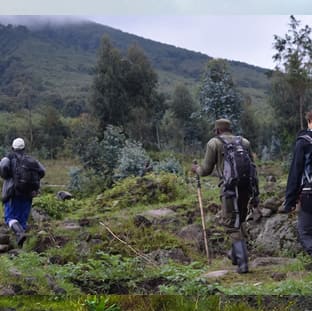
June through September (long dry season) and December through February (short dry season) offer the best trail conditions for gorilla trekking, with July-August being the most popular and expensive, while January-February offers similarly good conditions with noticeably fewer crowds and often better availability.
Table of Contents
Month-by-Month at a Glance
| Months | Conditions | Crowds |
|---|---|---|
| June-September | Long dry season, firmest trails | Highest, book furthest ahead |
| December-February | Short dry season, similarly firm trails | Moderate to high, especially December holidays |
| January-February specifically | Dry, often underrated | Noticeably lower than June-September |
| March-May, October-November | Wet season, muddier trails | Lowest, best lodge rates |
Peak Months: June to September
This is the most popular trekking window, with the driest, most reliable trail conditions, but also the highest demand, meaning permits and lodges need booking well in advance. July and August specifically coincide with Northern Hemisphere summer holidays, which pushes demand (and prices for premium lodges) higher still within an already busy window. Trail conditions themselves are excellent through this stretch: firm ground, minimal mud, and generally clearer visibility through the forest canopy, all of which make the physical side of trekking somewhat easier than in wetter months, though the terrain and altitude gain remain demanding regardless of season. This is also the window when the park's morning briefings tend to be busiest (more vehicles at the trailheads, a fuller car park at Kinigi headquarters), which is worth factoring in if a quieter, more intimate atmosphere matters to your experience as much as the trekking itself.
The Underrated Shoulder Season
January and February offer a good trade-off: similarly dry conditions to peak season, but with noticeably fewer trekkers and often more permit flexibility for last-minute planning. December itself is something of a special case: the short dry season technically starts in December, but the holiday period (mid-December through New Year) sees a real spike in demand that makes it feel more like peak season than the quieter conditions of January and February that follow it. Travellers with flexible dates who can shift a trip from late December into mid-January specifically trade very little in terms of trail conditions for a noticeably calmer park experience: smaller groups at the morning briefing, less competition for premium lodge rooms, and a generally more relaxed pace to the whole day.
"A good trade-off between conditions and crowds."
Trekking Outside the Dry Seasons
Trekking remains fully available during the rainier months too: trails are simply muddier, which doesn't stop the activity, just requires better rain gear and a bit more caution on steep sections. The wet months (March-May, October-November) come with upsides beyond lower crowds: lush, dramatic forest scenery, lower lodge rates, and a quieter overall experience at Volcanoes National Park headquarters during the morning briefing. Photographers in particular sometimes prefer the wetter months specifically: mist rising through the bamboo forest and the deeper greens of a well-watered rainforest produce a different, often more atmospheric set of images than the clearer, drier conditions of peak season. See our full gorilla trekking guide for what a trek involves regardless of season.
How Far Ahead to Book by Season
For June-September and the December holiday period, 3-6 months ahead is the general guidance, since permits are capped at 8 visitors per gorilla family per day and the park has a finite number of habituated families. For January-February, booking 2-4 months ahead is often sufficient given lower demand, though earlier is always safer if your travel dates are fixed, particularly if you have a strong preference for a specific lodge whose limited room inventory can sell out even when permits remain available. For the wetter months, shorter notice sometimes works, but treating any window as guaranteed last-minute availability is risky: permits are a limited resource in every season, just less contested outside peak months. A specific fixed travel date (an anniversary, a milestone trip planned around limited leave) should always push you toward booking earlier regardless of season, since flexibility is what actually buys you the option of waiting. See our permit booking guide for the full process. Booking early also gives you first choice of gorilla family assignment discussions with your operator regarding fitness level, since rangers make the actual assignment on the morning of your trek but your operator can flag preferences and mobility considerations in advance.
Packing Differences by Season
Dry-season trekking still calls for full rain gear. Volcanoes National Park's forest microclimate produces rain in any month, dry season included, so a waterproof layer is never optional regardless of when you visit. A common mistake among first-time dry-season trekkers is under-packing for rain on the assumption that "dry season" means no rain at all, when it really means less frequent and generally shorter rain rather than none. Wet-season trekking simply raises the stakes on this: properly waterproof (not just water-resistant) boots and outerwear, and gardening gloves for a firmer grip on muddier, more slippery vegetation during the climb. Trekking poles are also worth considering regardless of fitness level during wetter months, since even experienced hikers benefit from the extra stability on slick, uneven terrain that a dry-season trek simply doesn't present to the same degree. See our full gorilla trekking packing guide for the complete list regardless of season.
Frequently Asked Questions
What is the single best month for gorilla trekking?
July and August offer the most reliable dry conditions, though January and February offer nearly as good conditions with far fewer crowds.
Is gorilla trekking cancelled during heavy rain?
No. Trekking runs year-round regardless of rainfall; only the trail conditions change, not the activity's availability.
Is December a good month to trek?
Early December can work well, but the holiday period (mid-December through New Year) gets busy and should be treated more like peak season for booking purposes.
How much cheaper are lodges in the wet season?
Wet-season lodge rates are generally lower than peak season, but exact discounts vary by property, so confirm current rates with your operator.
Does golden monkey trekking follow the same seasonal pattern?
Broadly yes. Golden monkey trekking runs year-round with the same general dry-versus-wet trail condition differences, and is often paired with gorilla trekking on the same trip, typically as a lighter second activity around Musanze given its generally easier terrain.
Does the gorilla permit price change by season?
No. The USD 1,500 permit fee, set by the Rwanda Development Board, is fixed year-round regardless of season or demand. See our gorilla trekking cost guide for how this fits into a wider trip budget.
Should I avoid the wet season entirely as a first-time trekker?
Not necessarily. The activity itself is unaffected, and many first-time trekkers have a great experience in the wet season. It comes down to your tolerance for mud and rain versus your interest in lower crowds and rates.
Is trail difficulty affected by season, or only by which family I'm assigned?
Both play a role. Wet-season mud adds difficulty regardless of which family you're assigned, while dry-season trails are firmer across the board. Family assignment (and how far that family has moved) remains the bigger day-to-day variable in either season, which is why even peak-season conditions don't guarantee an easy trek on any given day.
Can I change my trek date if the weather looks bad on the day?
Generally no. Trekking proceeds regardless of light-to-moderate rain, and permits are date-specific. Extreme weather affecting safety would be handled by park authorities on a case-by-case basis, but this is uncommon, so book a date you're prepared to trek in rather than hoping for an exception.
Is there a "worst" month to avoid entirely?
Not really. Every month offers a functioning, worthwhile trekking experience with real gorilla encounters at its centre regardless of when you go. The real trade-offs are conditions versus crowds versus cost, not a binary good-versus-bad month distinction.