
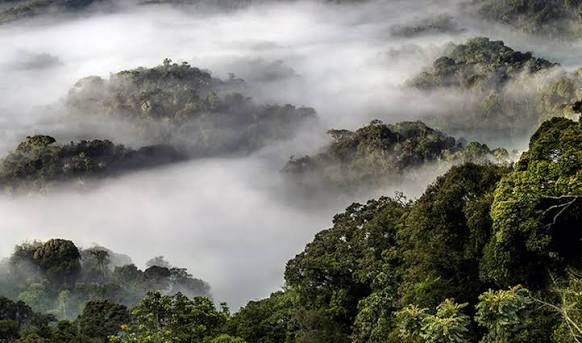
Cyamudongo is a separate, smaller patch of forest southwest of Nyungwe National Park's main block, home to a habituated group of chimpanzees tracked more reliably than those in the larger forest. A trek here involves an early start, a walk of variable length depending on the group's location, and a permit booked in advance. It is often paired with, but planned as a separate activity from, Nyungwe's other primate treks.
Table of Contents
- A forest of its own
- Why Cyamudongo is separate from the main park
- What a Cyamudongo trek involves
- Permits and booking
- Difficulty and fitness required
- What to expect once you find the group
- Comparing Cyamudongo to Nyungwe's other primates
- Combining Cyamudongo with a broader Nyungwe stay
- Getting to the Cyamudongo trailhead
- Chimpanzee tracking in Cyamudongo compared to other Rwanda options
- Building Cyamudongo into a full primate safari
- What to ask your operator before booking
- Mistakes to avoid
- Frequently Asked Questions
A forest of its own
Cyamudongo is not part of Nyungwe National Park's main forest block, but a separate, smaller patch of rainforest southwest of it, isolated from the main park by farmland and settlement. Despite this separation, it is administered as part of the same protected area and holds one of the more accessible populations of chimpanzees available to visitors in this part of Rwanda. For an overview of the wider park, see our Nyungwe National Park guide.
This guide explains why Cyamudongo is treated as a distinct activity, what a trek there involves, and how to plan it alongside the rest of a Nyungwe itinerary.
Why Cyamudongo is separate from the main park
Because Cyamudongo sits apart from Nyungwe's main forest, reaching it requires a distinct drive from most lodges and a different trailhead entirely from the park's other primate and hiking activities. The chimpanzee group here has also been the subject of more consistent habituation and tracking than the chimpanzees found in the larger, more continuous forest, which is why guides and operators generally recommend Cyamudongo specifically for visitors whose priority is a reliable chimpanzee sighting.
Cyamudongo's isolation from the main Nyungwe forest block is itself ecologically significant, since it represents a forest fragment that has persisted despite the agricultural land surrounding it, supporting a distinct and closely monitored population.
What a Cyamudongo trek involves
Like chimpanzee tracking elsewhere in East Africa, a Cyamudongo trek begins early in the morning with a briefing at the trailhead, followed by a walk into the forest with a guide and trackers who have often already located the group or picked up recent signs of its movement. Because the chimpanzees range over a defined territory within this smaller forest patch, walking times to reach them are generally more predictable than in larger forest blocks, though never guaranteed.
| Stage | What happens | Typical duration |
|---|---|---|
| Briefing | Guide covers rules and expectations | 10 to 15 minutes |
| Walk in | Following guide and trackers into the forest | 30 minutes to 2 hours |
| Observation | Time with the habituated group | Up to 1 hour |
| Walk out | Return to the trailhead | 30 minutes to 1 hour |
Because Cyamudongo requires a separate drive from the main park, ask your operator whether an overnight stay closer to the trailhead makes more sense than a long same-day round trip, particularly if you also plan other Nyungwe activities that week.
Permits and booking
A Cyamudongo chimpanzee trek requires its own permit, arranged in advance through your operator or directly with park authorities, and permit numbers are limited each day. Booking should happen well ahead of your visit, particularly in busier travel periods, since availability can be tighter than for some of Nyungwe's other activities.
Difficulty and fitness required
Terrain within Cyamudongo varies with the chimpanzee group's location on a given day, and while the forest patch itself is smaller than Nyungwe's main block, trails can still be steep, muddy and uneven. Reasonable fitness is required, and the unpredictability of walking time, which depends entirely on where the group is ranging that morning, means visitors should be prepared for anything from a short walk to a more sustained hike.
Weather can change quickly even on a morning that starts clear. Pack a rain layer regardless of the forecast, since a trek already in progress does not pause for rain.
What to expect once you find the group
Chimpanzees are considerably more active and vocal than many of Nyungwe's other primates, and a sighting often involves watching individuals move, feed, groom and interact within the group rather than the more static viewing sometimes associated with other species. Loud calls between group members are common and can be heard from some distance before the group itself comes into view.
Comparing Cyamudongo to Nyungwe's other primates
Visitors planning a full primate-focused itinerary in this part of Rwanda often ask how Cyamudongo fits alongside the park's other treks. The short answer is that it targets a single species with a dedicated trip, while activities in the main forest block cover a broader range. Our guide to the 13 primates of Nyungwe Forest sets out the full species list found across the wider park, and our guide to Nyungwe's colobus monkeys covers the large-troop viewing available in the main block, which is a genuinely different experience from a Cyamudongo chimpanzee trek.
Combining Cyamudongo with a broader Nyungwe stay
Because of the separate drive and trailhead, most visitors treat Cyamudongo as a dedicated day within a longer Nyungwe stay rather than an add-on to an already full schedule. A common pattern is to spend the first day or two on the park's main activities, such as a forest hike or the Isumo waterfall trail, before dedicating a separate morning specifically to Cyamudongo. Some itineraries also pair the drive to Cyamudongo with a stop at a nearby tea estate, covered in our guide to Rwanda's tea plantations, since estate land often borders the access route.
Getting to the Cyamudongo trailhead
Access to Cyamudongo typically means an additional drive beyond the main Nyungwe park road, and your operator or guide will confirm the exact route and timing based on where you are staying. Because of this extra travel, confirm departure times with your operator well before the morning of your trek, since an early, punctual start matters more here than for activities based directly at the main park headquarters.
Chimpanzee tracking in Cyamudongo compared to other Rwanda options
Rwanda offers chimpanzee tracking in more than one location, and Cyamudongo is often compared with other forest sites covered under our broader guide to chimpanzee trekking in Rwanda. What sets Cyamudongo apart is its combination of a small, well-defined forest area with a habituated group, which tends to produce more predictable sightings than larger, more dispersed forest habitats elsewhere. Travellers deciding between destinations should weigh this reliability against the additional drive time Cyamudongo requires compared with treks based closer to a main lodge.
Building Cyamudongo into a full primate safari
For visitors who want chimpanzees, colobus troops and mountain gorillas within a single Rwanda trip, Cyamudongo typically forms one leg of a longer, carefully sequenced itinerary. Our 6-day Rwanda primate safari is structured around exactly this kind of trip, allocating dedicated days to each primate activity rather than trying to combine them within a single rushed schedule. Because Cyamudongo's extra drive time adds a logistical layer that gorilla trekking and Nyungwe's other activities do not share, having an itinerary built with this in mind from the outset avoids the risk of an overly compressed schedule.
What to ask your operator before booking
Before confirming a Cyamudongo trek, ask your operator to clarify the drive time from your specific lodge, whether the permit is bundled with other Nyungwe activities or purchased separately, and what happens if the group is not located within the usual walking window. Clear answers to these questions before your visit reduce the chance of a scheduling surprise on the morning itself.
Mistakes to avoid
Do not assume Cyamudongo is simply an extension of Nyungwe's main forest activities, since it requires its own permit, its own drive and its own booking well in advance. Do not underestimate the walk, even though the forest patch itself is smaller, since walking time depends entirely on the chimpanzee group's location that morning. And do not schedule a Cyamudongo trek on the same morning as a long onward drive, since treks can run longer than planned and a tight connection risks disappointment on both fronts.
Frequently Asked Questions
Is Cyamudongo part of Nyungwe National Park?
Yes, it is administered as part of the same protected area, but it is a separate, smaller forest patch southwest of Nyungwe's main block, reached by a different drive and trailhead.
Why do people choose Cyamudongo over the main Nyungwe forest for chimpanzees?
The chimpanzee group in Cyamudongo has been more consistently habituated and tracked, making sightings somewhat more reliable than in the larger, more continuous main forest.
How long is the walk to find the chimpanzees?
Walking time varies depending on where the group is ranging that morning, from as little as thirty minutes to two hours or more each way.
Do I need a separate permit for Cyamudongo?
Yes, Cyamudongo chimpanzee tracking requires its own permit, distinct from other Nyungwe activities, and should be booked well in advance.
Is Cyamudongo trekking difficult?
It requires reasonable fitness. Trails can be steep and muddy depending on the group's location, and the unpredictable walking time means you should be prepared for a longer hike than expected.
Can I combine Cyamudongo with other Nyungwe activities on the same trip?
Yes, most visitors dedicate a separate day to Cyamudongo because of the extra drive involved, then spend other days on the park's main forest hikes and primate treks.