
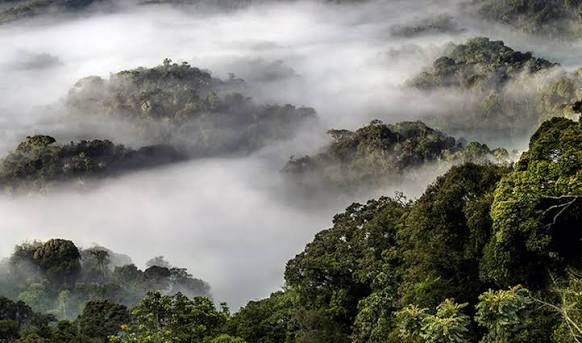
Nyungwe's significance rests on three things: it's one of Africa's oldest surviving montane rainforests, it protects roughly 1,000 square kilometres of continuous, largely intact habitat, and it sits on the watershed divide between the Congo and Nile river basins. Its specific UNESCO World Heritage designation status should be confirmed against UNESCO's official records, since heritage nomination and inscription is a distinct, often lengthy process from general conservation recognition.
Table of Contents
- Understanding Nyungwe's Heritage Recognition
- One of Africa's Oldest Rainforests
- A Watershed Between Two River Basins
- The Nyungwe-Kibira Ecosystem
- Why Scale and Age Matter for Biodiversity
- How Visiting Supports Conservation
- A Role in Regional Climate Stability
- What This Means for You as a Visitor
- Frequently Asked Questions
Understanding Nyungwe's Heritage Recognition
Nyungwe's exceptional biodiversity and ecological importance have brought it significant international conservation attention and discussion around formal heritage recognition. UNESCO World Heritage designation is a specific, formal process: a site can be discussed, proposed, or placed on a tentative list well before (or instead of) being formally inscribed. Travellers and researchers wanting the precise current status should check UNESCO's official World Heritage site list directly rather than relying on general conservation discussion as confirmation of formal inscription.
One of Africa's Oldest Rainforests
Nyungwe is widely recognised as one of Africa's oldest surviving montane rainforests, a status that matters ecologically because older, continuously forested ecosystems tend to support richer, more specialised biodiversity than younger or more disturbed forest. Precise dating estimates vary by study and methodology; treat specific age figures as broadly indicative rather than a single confirmed number.
"Rainfall here ultimately flows toward two of Africa's largest river systems."
A Watershed Between Two River Basins
Nyungwe sits on the divide between the Congo and Nile river basins, meaning the forest's rainfall and water retention directly affect water systems extending far beyond Rwanda's borders. This watershed role gives the forest's protection a significance that goes beyond wildlife habitat alone: deforestation or degradation here would have consequences rippling through two of Africa's largest river systems, which is part of why the park's conservation is treated as a continental, not just national, priority.
The Nyungwe-Kibira Ecosystem
Nyungwe forms part of a larger forest ecosystem that extends south into Burundi's Kibira National Park, and conservation planning for the two forests is sometimes discussed jointly given their ecological connection as effectively one continuous habitat divided by a national border. This transboundary character is part of what makes Nyungwe's specific heritage and conservation discussions more complex than a single-country designation might otherwise be.
Why Scale and Age Matter for Biodiversity
The roughly 1,000 square kilometres Nyungwe protects gives it the scale to support full food chains and 13 primate species without the population bottlenecks that smaller, fragmented forest patches face elsewhere. See our 13 primates guide and wildlife guide for what that biodiversity actually looks like on the ground, rather than in the abstract.
How Visiting Supports Conservation
Park entry fees and trail permits contribute directly to Rwanda's conservation funding model, similar in principle to how gorilla trekking revenue supports Volcanoes National Park's conservation programmes. Choosing a responsible operator and following guided-trail rules, as covered in our hiking trails planning guide, is a direct way visitors contribute to the forest's ongoing protection rather than simply passing through it.
A Role in Regional Climate Stability
Beyond its watershed function, Nyungwe's forest cover plays a role in regional rainfall patterns and climate stability, a function increasingly recognised as forest loss elsewhere in the region has made its consequences more visible. Intact montane rainforest at this scale influences local precipitation cycles in ways that isolated smaller forest patches simply cannot replicate, adding another layer to why the park's continued protection matters beyond its immediate wildlife value.
What This Means for You as a Visitor
None of this conservation context should feel abstract or disconnected from your actual visit. Understanding it changes how a Nyungwe trip lands. Walking through a forest this old, this ecologically significant, and this connected to systems well beyond Rwanda's borders is a different experience when you understand what you're actually looking at, rather than simply checking off a scenic hike. Guides who can speak to this context, not just point out wildlife, add real depth to a visit that a purely activity-focused itinerary misses.
Frequently Asked Questions
Is Nyungwe National Park officially a UNESCO World Heritage Site?
Nyungwe's exceptional biodiversity has brought it international conservation recognition and heritage discussion; confirm its current, specific UNESCO designation status directly with UNESCO's official site list, since designation processes can take years and status can change.
Why is Nyungwe considered ecologically significant?
Its age, scale and intact canopy support exceptional biodiversity, and the forest sits on the watershed divide between the Congo and Nile river basins, giving it significance well beyond Rwanda's borders.
What is the Nyungwe-Kibira connection to Burundi?
Nyungwe forms part of a larger forest ecosystem that extends into Burundi's Kibira National Park, and conservation efforts for the two are sometimes discussed jointly given their ecological connection.
How old is Nyungwe's forest?
Nyungwe is recognised as one of Africa's oldest surviving montane rainforests, though precise dating varies by study and methodology.
Does visiting Nyungwe support its conservation?
Yes, park fees and tourism revenue contribute to Rwanda's conservation funding model, similar to how gorilla trekking revenue supports Volcanoes National Park.
What river systems does Nyungwe's watershed feed?
Nyungwe sits on the divide between the Congo and Nile river basins, meaning rainfall here ultimately flows toward two of Africa's largest river systems.
Does Nyungwe's forest affect regional climate beyond Rwanda?
Yes, intact montane rainforest at this scale influences regional rainfall patterns in ways smaller, fragmented forest patches cannot replicate, giving its protection significance beyond wildlife habitat alone.